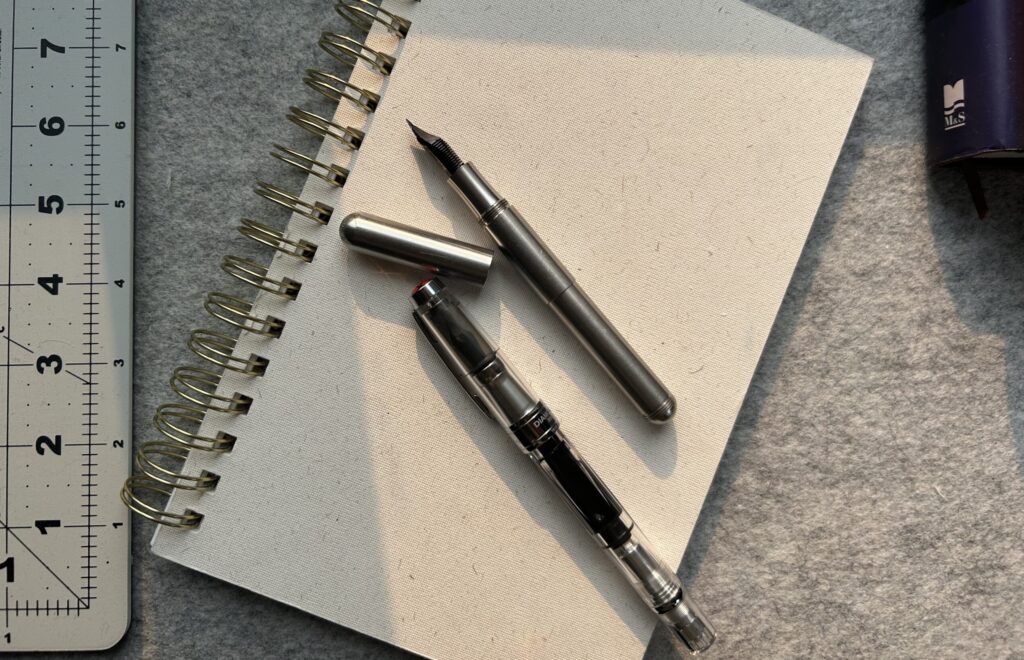
This week I completed a scrappy little project that I’ve been building at the margins of everything else – an 8-page comic memoir following a Jon Claytor prompt. The prompt asks us to think about objects that have defined different eras of our lives and speak with their (the objects’) voices. My results are a bit of a variation on the original prompt, but that’s part of the joy of creating things like this – we never really know where it’s going to take us. The drawings were started in June, completed and posted just this week. They’ll live in perpetuity over on the Comic Drawing Experiments page but they also deserve a post of their very own.
It’s always an interesting experience to present finished work – even scrappy, unedited work like this. There’s an inevitable quality to it, like this is what it was always going to look like. The reality is, there’s nothing inevitable about it. Each page, each element of the page is the result of a cascading sequence of decisions. I could start again today and come out with something completely different – just as valid and true, but highlighting different things.
The thinking behind these 8 pages filled a healthy section of my process journal. There are pages of lists of places I’ve lived, turning points, roommates, experiences, important people. . . all of which helped me identify different seasons of my life. Ultimately it was distilled down into these few objects.
Before starting drawing, I created some constraints for myself. No pencil, only ink. Only in this one sketchbook on this particular size of paper (6″ x 9″). No writing about the object prior to drawing and no first drafts of the text. I wanted it to remain spontaneous and raw, and to reveal itself through the process of creating it. I used correction tape for some of the more obvious mistakes, but mostly just let it be imperfect. I wanted it to feel genuine and hand made.
The experience of drawing the object is contemplative. Drawing is slow craft, allowing time to think about the object and my relationship to it. The limited space for text means that it can’t get overly wordy – the image has to be the centrally organizing feature, the words are about adding layers of meaning.
I decided on the objects one at a time, each one after the previous page was already completed. I tried not to get too far ahead of myself, to let the next thing suggest itself without being contrived or forced. Sometimes the next page’s object would be evident by the time the current page was finished, and other times I had to set it all aside until the next object presented itself.
I chose things for my early life that others would relate to, too – even looking up vintage Crayola packaging and pictures of banana-seat bikes from the mid-1970s to ensure that there was some veritas. I drew the blanket, sewing machine, and tank top from memory.
I let the text emerge in the same way, page by page. There was no preconceived sense of what each page would be about. Some pages took minutes to write, others had to be set aside, partially written, for weeks before they came together. The first 6 1/2 pages sat in their current state for 5 weeks before the last couple word balloons on page 7 announced themselves to me. Once that was done, the rest came together in a matter of hours.
It sounds obvious, but drawing and writing are acts of creation. When we participate in them, we are making things that never existed before and could not exist without our doing them. Each line, each word, each decision is an act of shaping something into being. The act of shaping is deeply influenced by each of and all of the things that have shaped us – a sum of our experiences, our perceptions, our influences, our doubts, our confidence. We have been made, and we are makers.
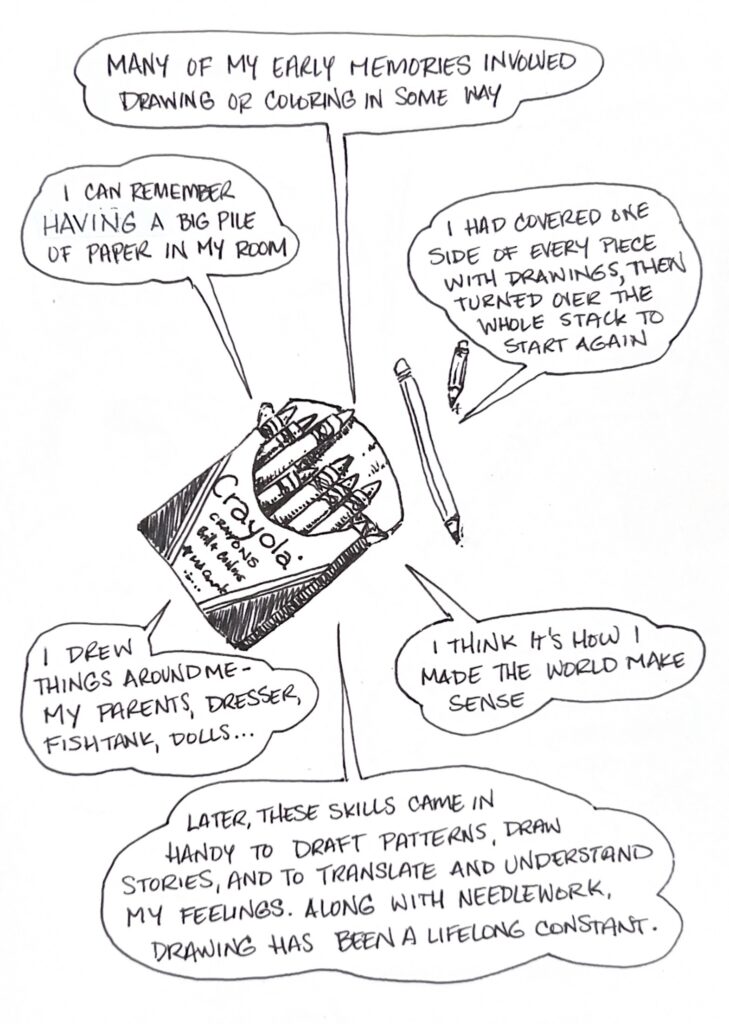
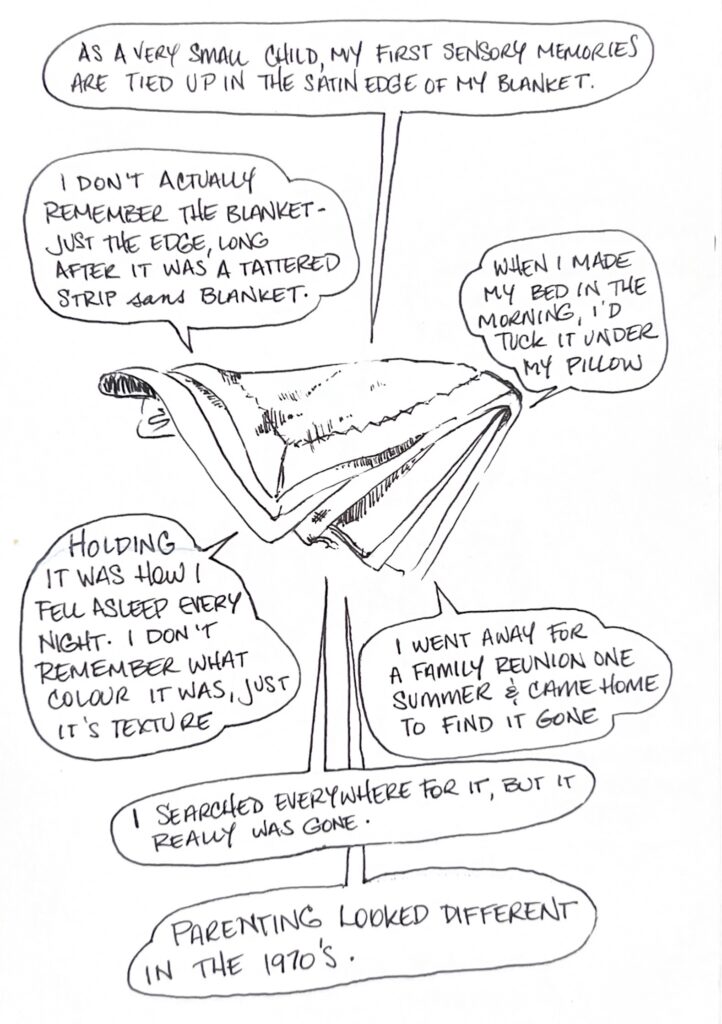
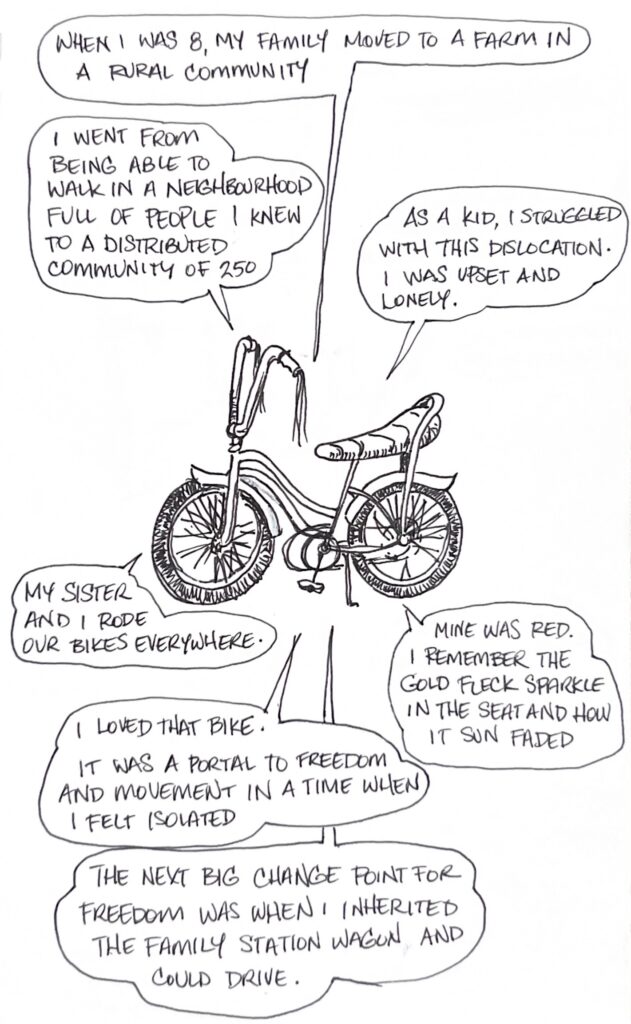
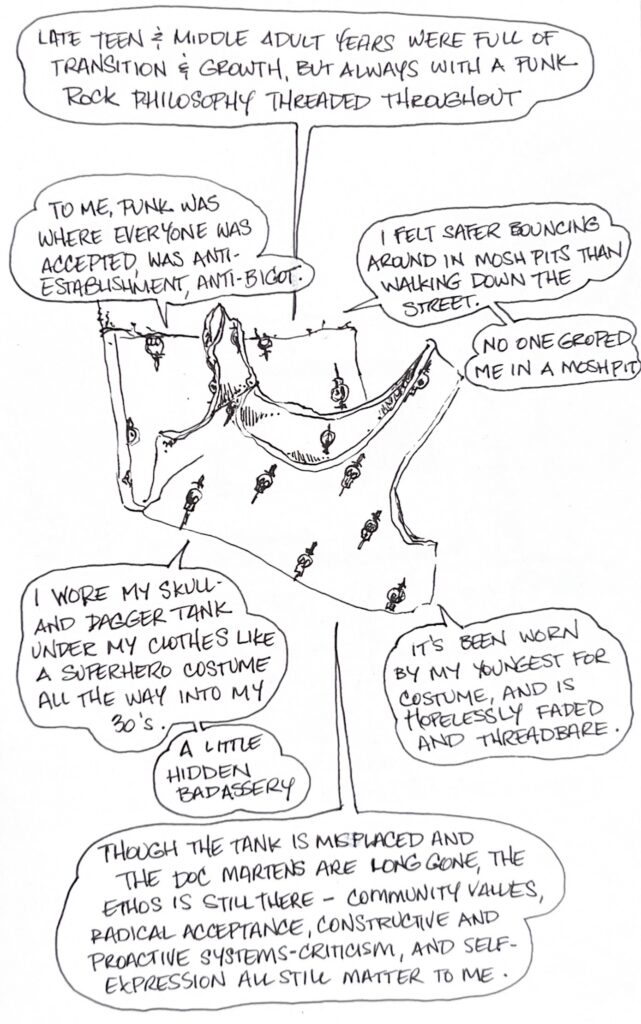
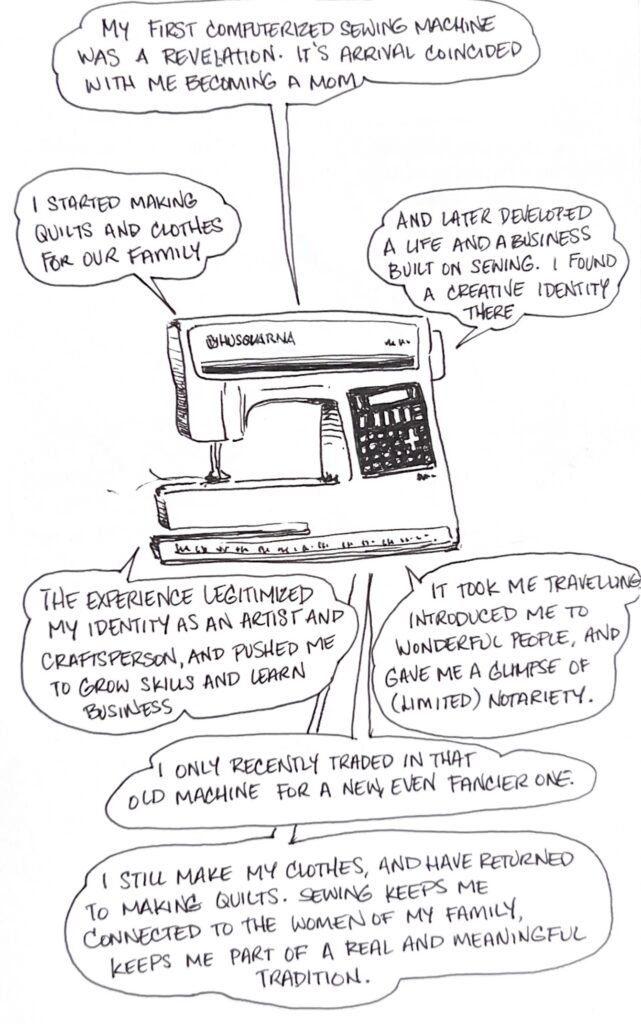
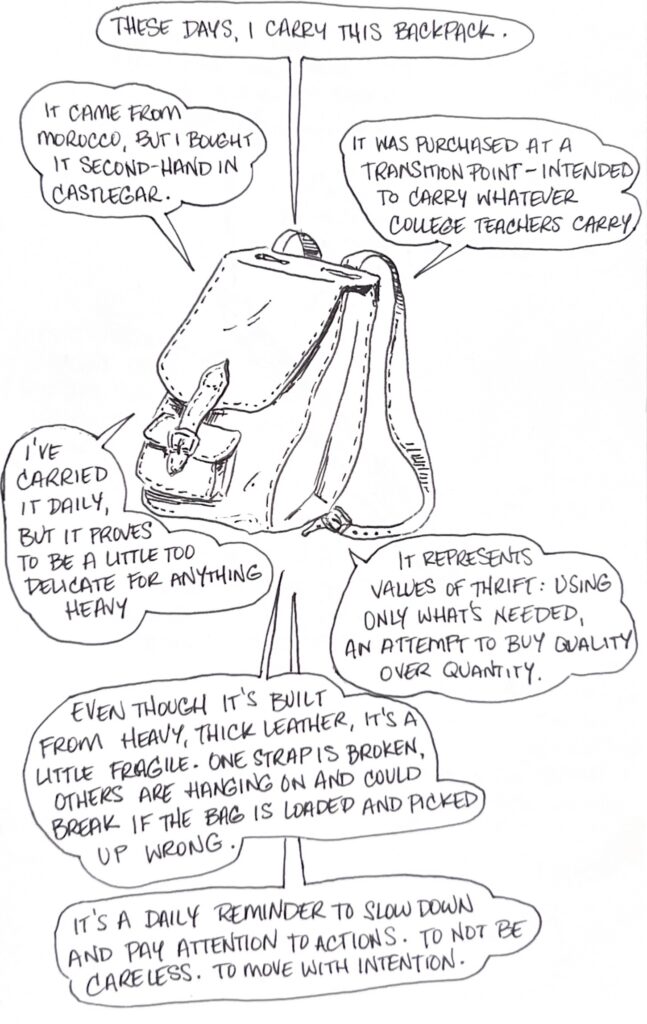
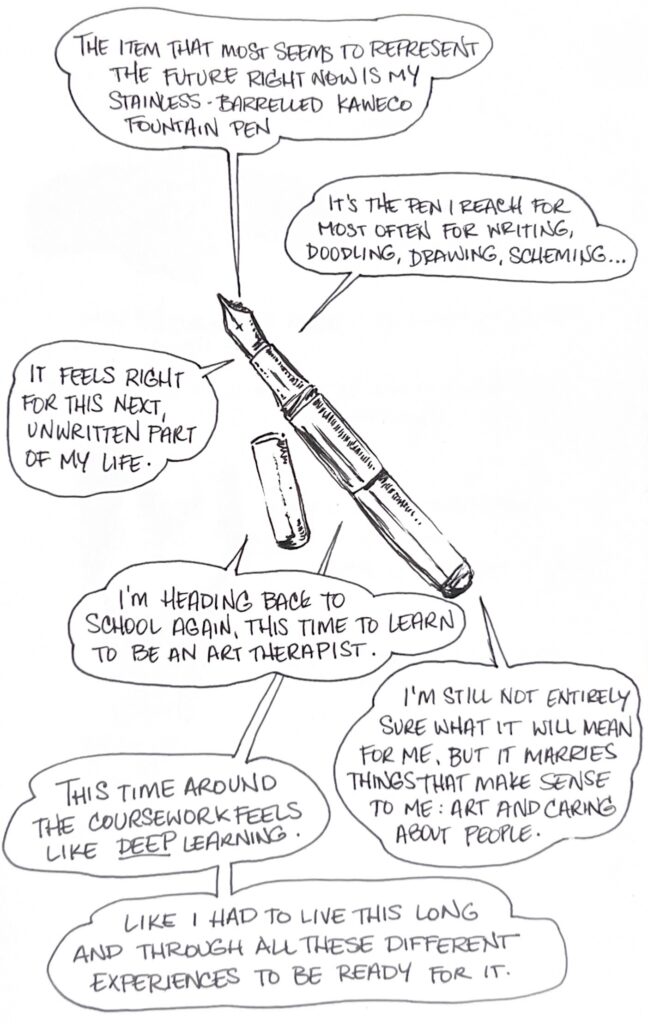
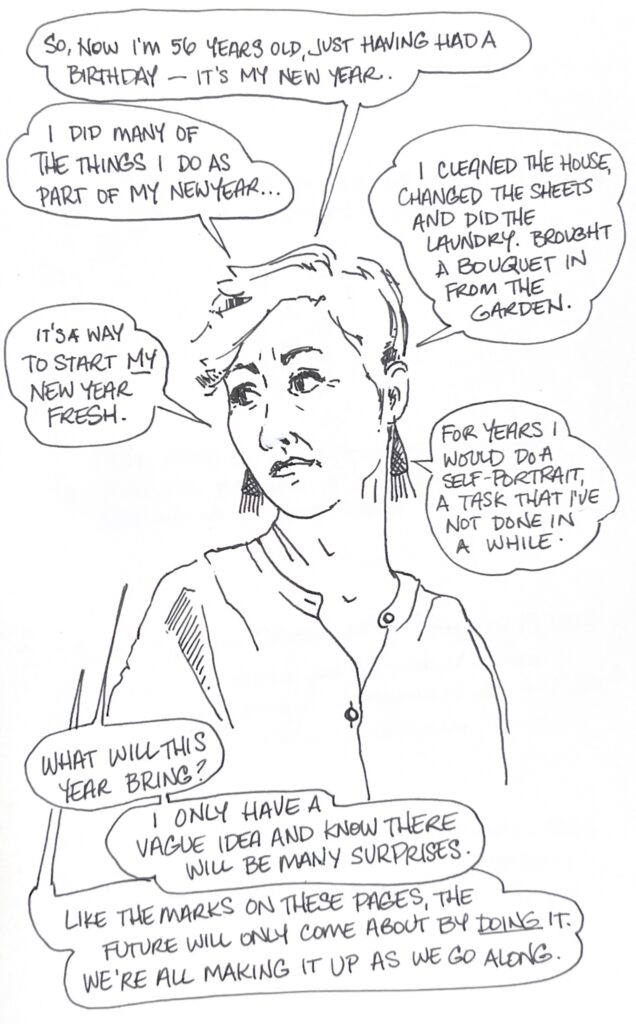
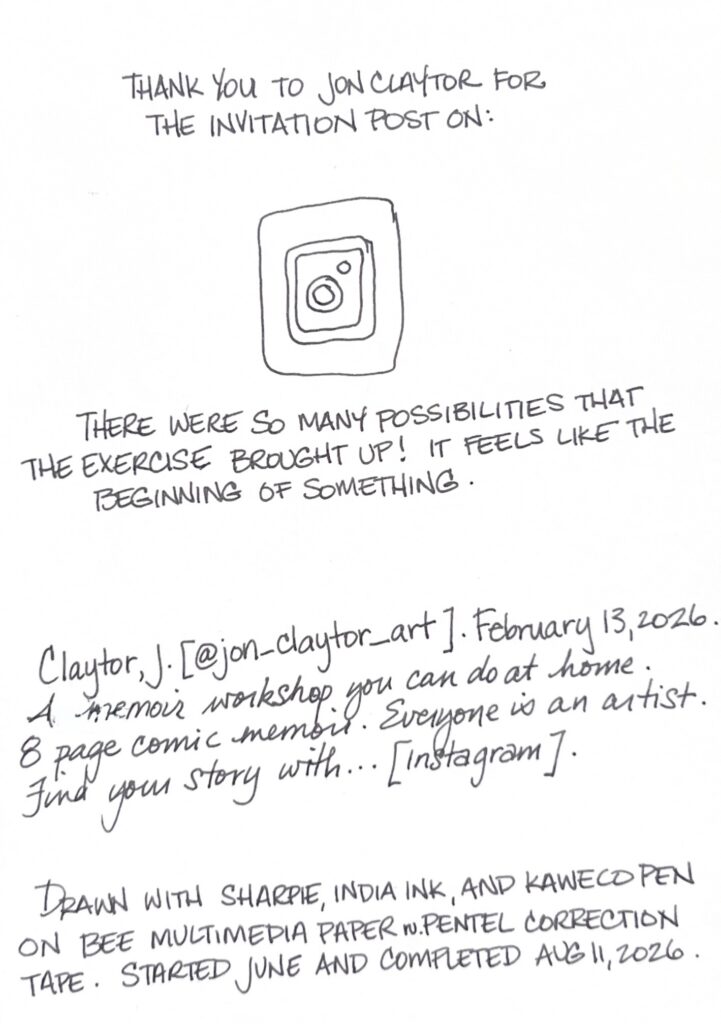
In addition to this little project, I’ve been attending as many of the Friday Night Comics (FNC) events that the Sequential Artists Workshop (SAW) puts on as possible. It’s a generously supportive co-making space where all participants create something new based on prompts by the featured artist/author. Each session is full of surprises – we surprise each other and ourselves. We make things that never existed before (not even an hour previous) and we share them with each other, raw and unedited. The group is collegial, kind, and genuine, brought together through a love of this medium and a willingness to take risks in it. People’s work in that spontaneous space can be silly or profound. There’s laughter, and heartfelt comfort and acceptance when the artworks reveal vulnerability. I look forward to Friday afternoon every week because of it. Together we innovate. We conjure. We connect.
I know there’s many people in my daily life, in my demographic, who don’t ‘get it’ – why comics? Comics are for all age groups and are a valid art form of their own. I (and folks who go to the SAW FNC) know that the combination of words and images allows us to understand ourselves and each other in deep and real ways. We process our experiences through comics, we use comics to help us think more deeply. Comics are an accessible way to bridge the distances between us, to feel with each other, to understand each other.
So, please take a few minutes to read the 8-page memoir. It’s reflection of this moment and of all the moments leading up to now. It’s conjured. It’s a distillation. It’s handmade. It brought me some truths in the process, and I’m grateful to share them with you.